I want a maintenance review to leave someone clearer about what happens next.
Which job needs attention? Who needs to speak to whom? What will the next review actually check?
That's where my interest in reporting leads me. I like building things with Power BI. I also care about the person opening the report, the conversation it starts and the work someone has to do afterwards (usually alongside plenty of other work).
My full-time role involves the systems that support maintenance and reliability, including reporting and performance reviews. I'm keeping that commitment. Maintenance Data Pro gives me somewhere to share ideas about this work and develop them through useful conversations. I'd like someone facing a similar problem to find something they can use here. That's how I want to earn their trust.
The bit I keep coming back to is follow-through.
Something to come back to
Here's a fictional example.
A review ends with a question about a pump work order. The completion note says “tested”. It doesn't say what the check covered.
I'd want to stay with that conversation a little longer.
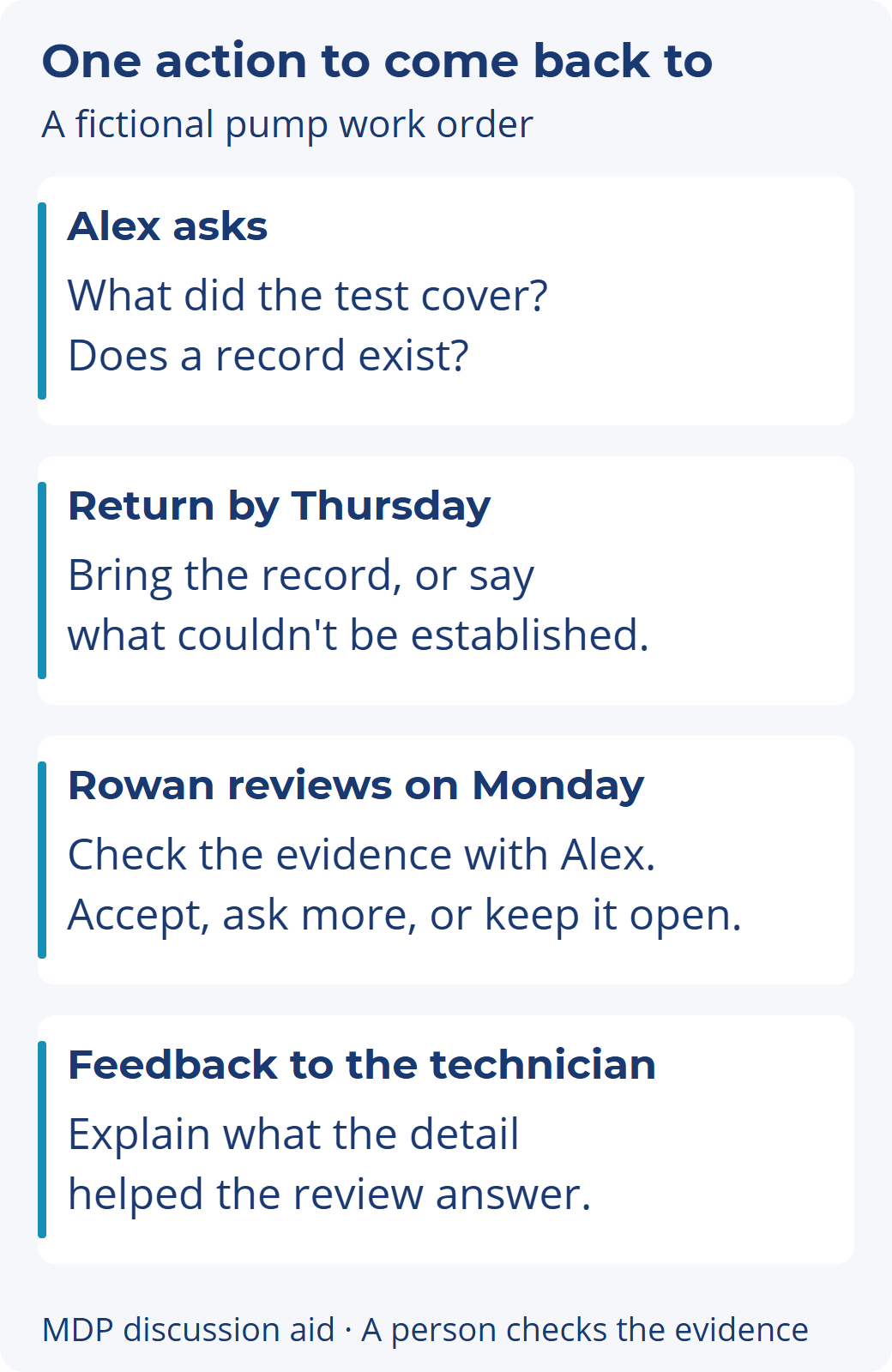
Alex, the planner, agrees to ask the technician what the test covered and whether a record exists. Alex will bring back that record by Thursday, or say what couldn't be established. Rowan, the supervisor chairing the review, will look at it with Alex on Monday.
There's now something specific to come back to. The question can stay open if the evidence doesn't settle it. Nobody has to turn “I couldn't establish that” into a reassuring sentence just to get an action closed.
I'd also want the technician to hear what their answer helped someone understand. Asking for more detail takes their time. They deserve to know why it mattered.
 Open full-size image (opens in a new tab)
An original MDP discussion card. The people and work order are fictional. Rowan checks the evidence; an unresolved question stays visible.
Help the person doing the follow-up
I want the information to make that conversation easier. The original work order should be within reach. What remains unknown should be visible. Alex should be able to find the commitment without searching through last week's slides.
And I'd want to ask Alex whether the task was practical. Could they get hold of the technician? Was the record available? If something got in the way, that's part of what the next review needs to hear.
It's easy to write “follow up” in the minutes. There's quite a lot hidden inside those 2 words.
That's why my interest reaches beyond producing the report. Meetings, action records and feedback all need a place in how people use it. In What happens after a KPI turns red?, I follow one fictional review through that return to the evidence. Here, the personal point is that I want the person taking an action away to have a fair chance of doing it.
AI assistance interests me for the same reason. In the pump example, I'd consider trying an assistant to draft the follow-up card from the question, Alex's agreed task, the Thursday deadline and Rowan's Monday review. That's a proposed use, with no AI trial behind this example.
Alex would check the draft against what was actually agreed. The assistant would have no test result to add and no basis for inventing one. Rowan would still decide whether the evidence answered the question. I'd want those responsibilities clear before trying it (a tidy paragraph can be quite persuasive).
The person entering the original note matters here too. Why good intentions still produce poor maintenance data looks at what someone needs to record useful information, including time, support and feedback. I'd want any AI help to make room for that human conversation.
Try the meeting close-out card with one action from your next review. Ask the person doing it and the person accepting it to describe what they'll bring back and what they'll check. See whether their answers match.
That's the kind of thing I want to keep working on and sharing here. A useful question, a commitment someone can carry out, and a return to what happened.